The Gate That Stops the Spear, the Hall That Washes Weapons: Dreaming of Peace
From Mangillu to Sebyeonggwan: reading the space through its names
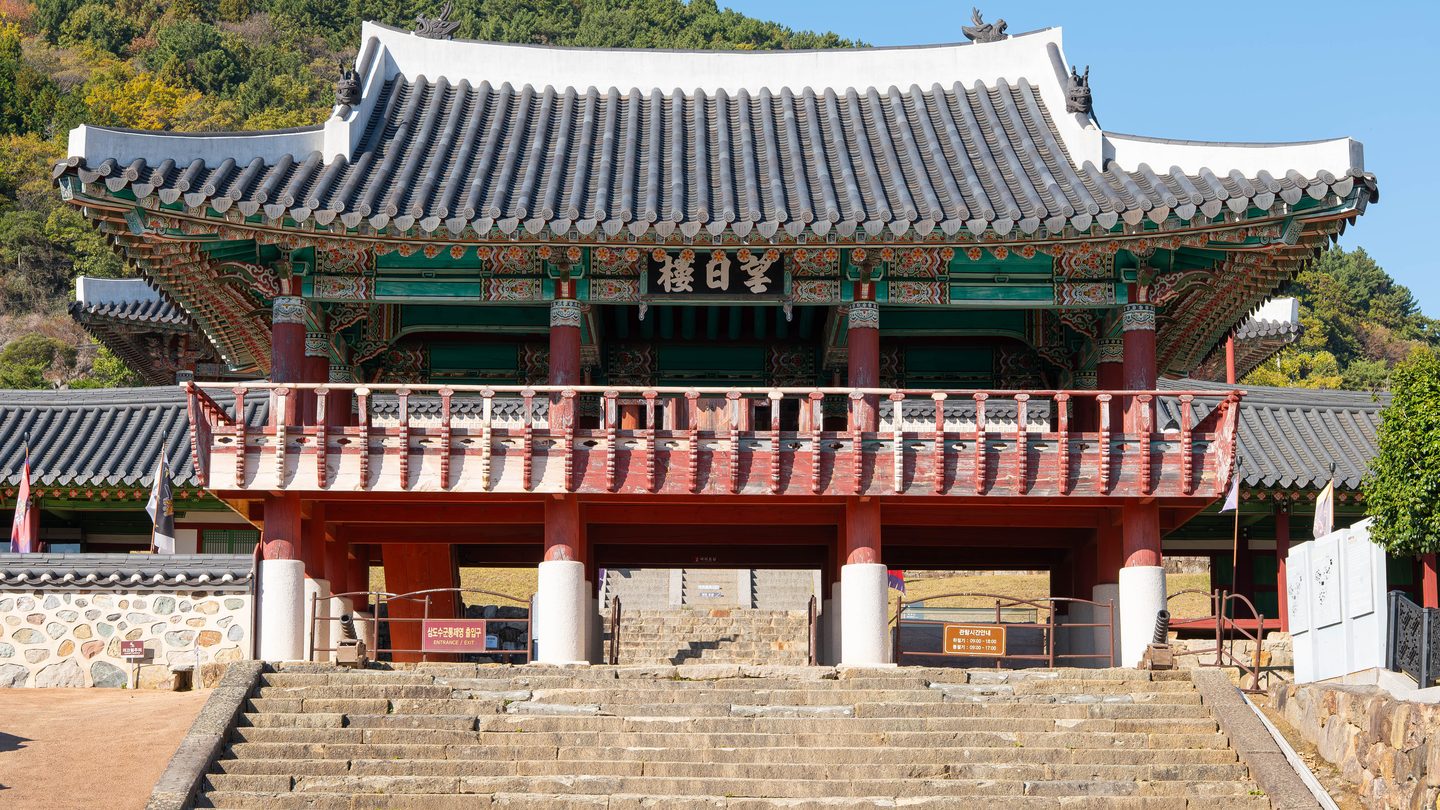
Front of Mangillu
Walking through Tongjeyeong means passing one building after another, but it is also a journey of reading the names given to each space. Past the ticket office you reach Mangillu, climb the steps through Jigwamun, and the main hall, Sebyeonggwan, comes into view. The three stand on one continuous path, yet each shows a different side of the military base.
The path through three places
①Mangilluthe entrance pavilion
②Jigwamunthe gate at the top of the steps
③Sebyeonggwanthe main hall and guesthouse
Mangillu is the pavilion you meet on the way into the command. Visitors pass through it toward the inner grounds. Moving through gates, stairs and courtyards is also a passage from the street outside into the interior of a military base. Today it is where the visit begins, and as you follow the path you naturally see that Tongjeyeong was a base made of many connected buildings and spaces.
① Mangillu to ② Jigwamun
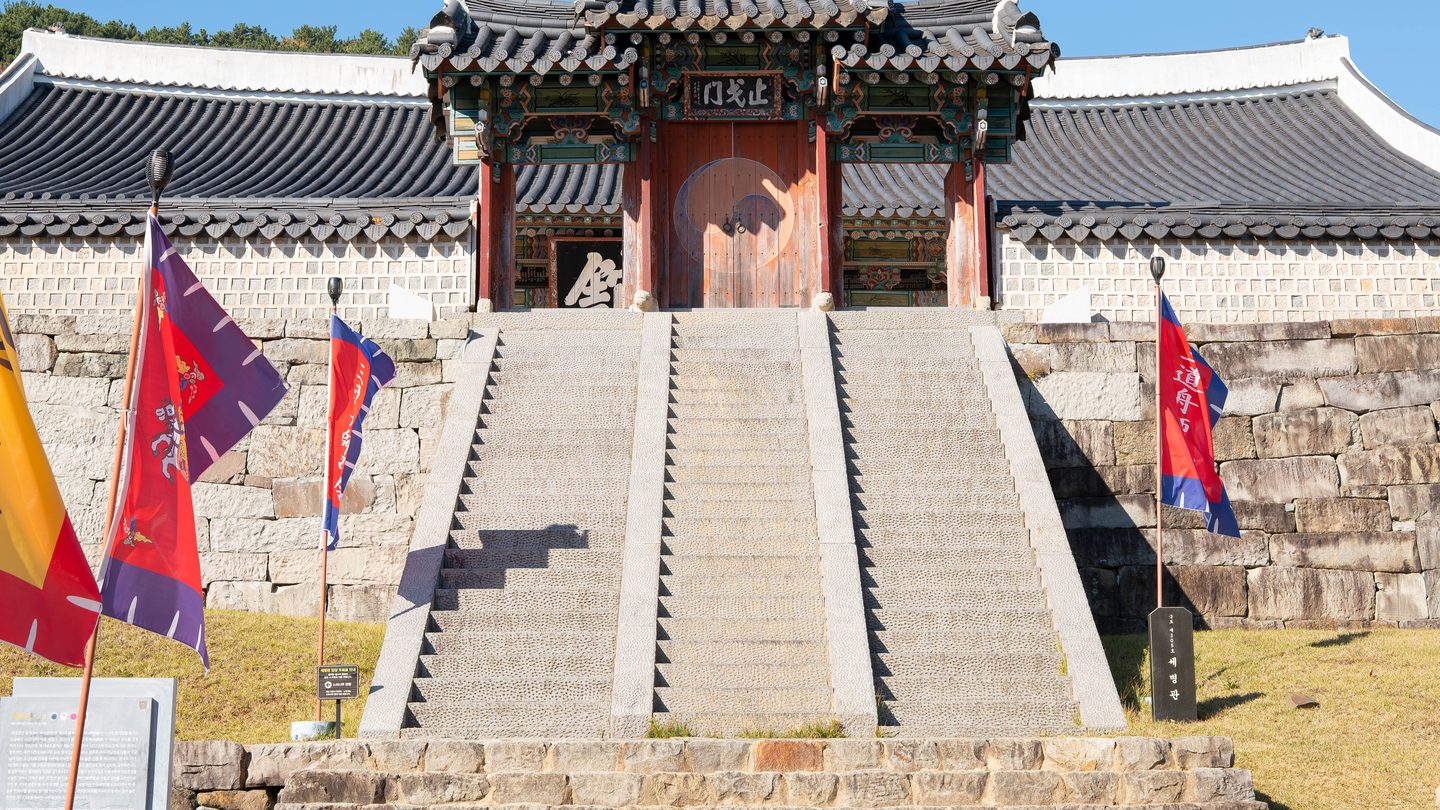
Jigwamun and its steps
Beyond Mangillu, up the steps, stands Jigwamun (止戈門). Its two characters, ji (止) and gwa (戈), mean "to stop" and "spear." Together they read as "the gate that stops the spear."
Reading the name · 止戈
止ji · to stop
+
戈gwa · spear
=
止戈to stop the spear
Zuo Zhuan: 止戈爲武, stopping the spear is what makes true martial strength
The phrase also connects to a classical text. The Zuo Zhuan contains the line "止戈爲武": to stop the spear is what makes true martial strength. It is a reading that finds the meaning of 武 not in war or a show of force, but in putting away weapons and ending violence. With this line in mind, you can ask why a military gate was given a name meaning "stop the spear."
Of course, the name cannot be taken to mean that there was no war. Tongjeyeong was where the navy was commanded and military strength maintained. Still, the name Jigwamun shows that even in a space devoted to force, one can read a wish to bring fighting to an end. Arming and commanding troops, and hoping for peace, are not necessarily opposites.
When you reach Jigwamun, look up at the gate from the foot of the steps, then follow the path beyond it to Sebyeonggwan. As you pass through a single gate, notice how the spaces connect, and consider how the name "stop the spear" relates to this place.
③ Sebyeonggwan: drawing down the Milky Way to wash the weapons
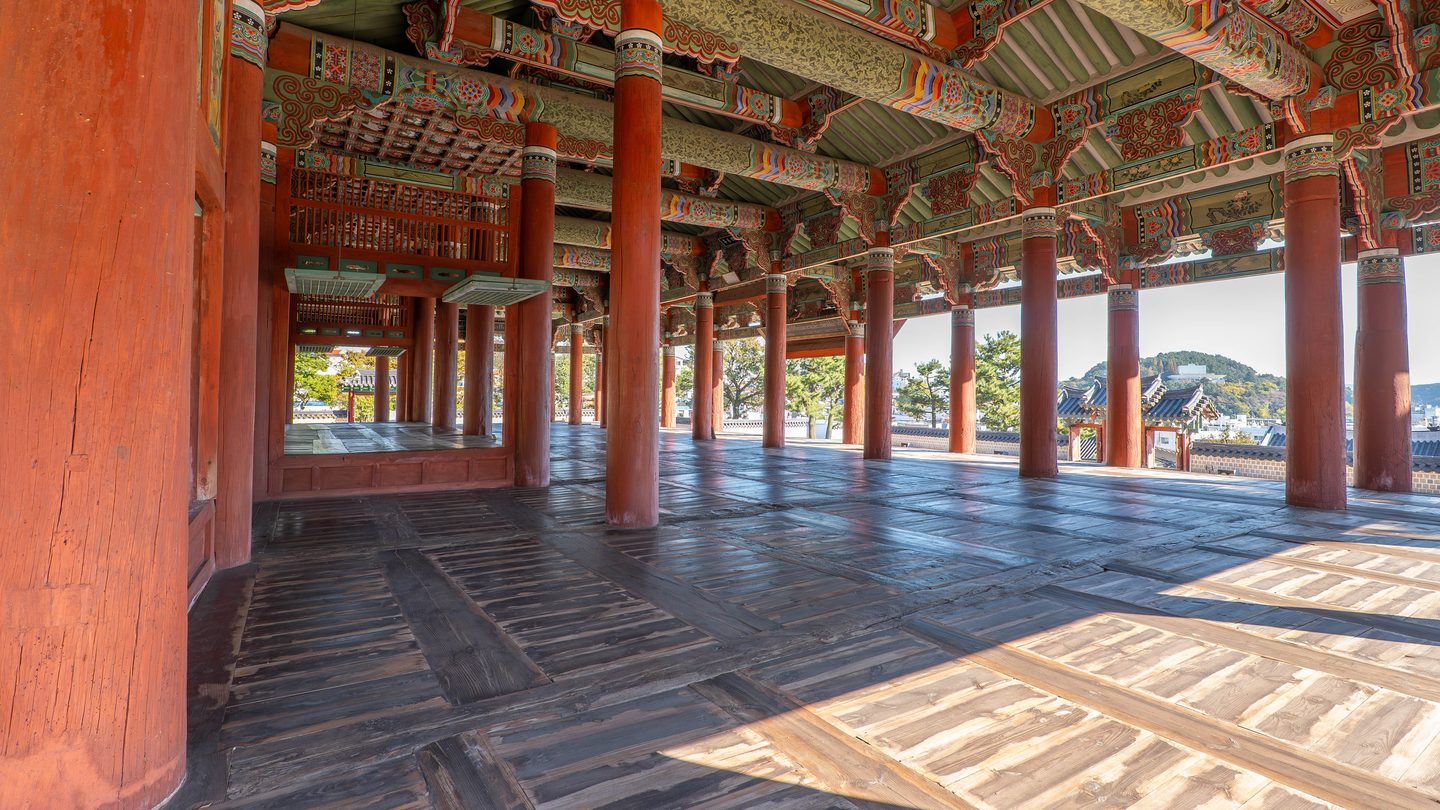
Inside the Sebyeonggwan hall
Past Jigwamun, Sebyeonggwan (洗兵館) appears. The guesthouse hall of the command was first built in 1605, rebuilt on a larger scale in 1646 and repaired again in 1872. It was designated a National Treasure on 14 October 2002. It is a single-story building with a hipped-and-gabled roof, nine bays wide and five bays deep. The open wooden floor, thick columns and space running on without walls or windows show its scale and structure clearly.
What strikes you first at Sebyeonggwan is its size. Step inside and there are almost no walls to block the view; the floor spreads wide and the rows of columns create depth. A raised platform at the center sets that area apart from the rest of the floor. Even within an open structure, the hall marks a hierarchy between the center and its surroundings.
Sebyeonggwan floor plan (concept)
Raised center
Front: 9 bays
Side: 5 bays
1605first built
1646rebuilt larger
1872repaired
2002National Treasure
A concept drawing of the bays and the raised center. It does not show the actual column positions or the size of the dais.
The name Sebyeonggwan carries another story. Sebyeong (洗兵) means "to wash weapons." The name is said to come from the final lines of "Washing Weapons and Horses" (洗兵馬) by the Tang poet Du Fu.
安得壯士挽天河,淨洗甲兵長不用
If only a hero would draw down the Milky Way, wash the armor and weapons clean, and never need them again.
Du Fu longed for a world where the Milky Way could be drawn down to wash the weapons, and they would never be needed again. Read alongside this poem, the name Sebyeonggwan becomes more than a label for a military building; it recalls the hope that war would end and weapons could be laid down.
If Jigwamun is "the gate that stops the spear," Sebyeonggwan is "the hall that washes weapons." The two names belong to different buildings, yet together they let us read, within a base built for force, a wish for fighting to stop and for peaceful times.
Two names, one wish
止戈門JigwamunThe gate that stops the spearZuo Zhuan: 止戈爲武
洗兵館SebyeonggwanThe hall that washes weaponsDu Fu, “Washing Weapons and Horses”
The wish to end war and live in peace
What to look for on the wooden floor
Central platform and ceiling details
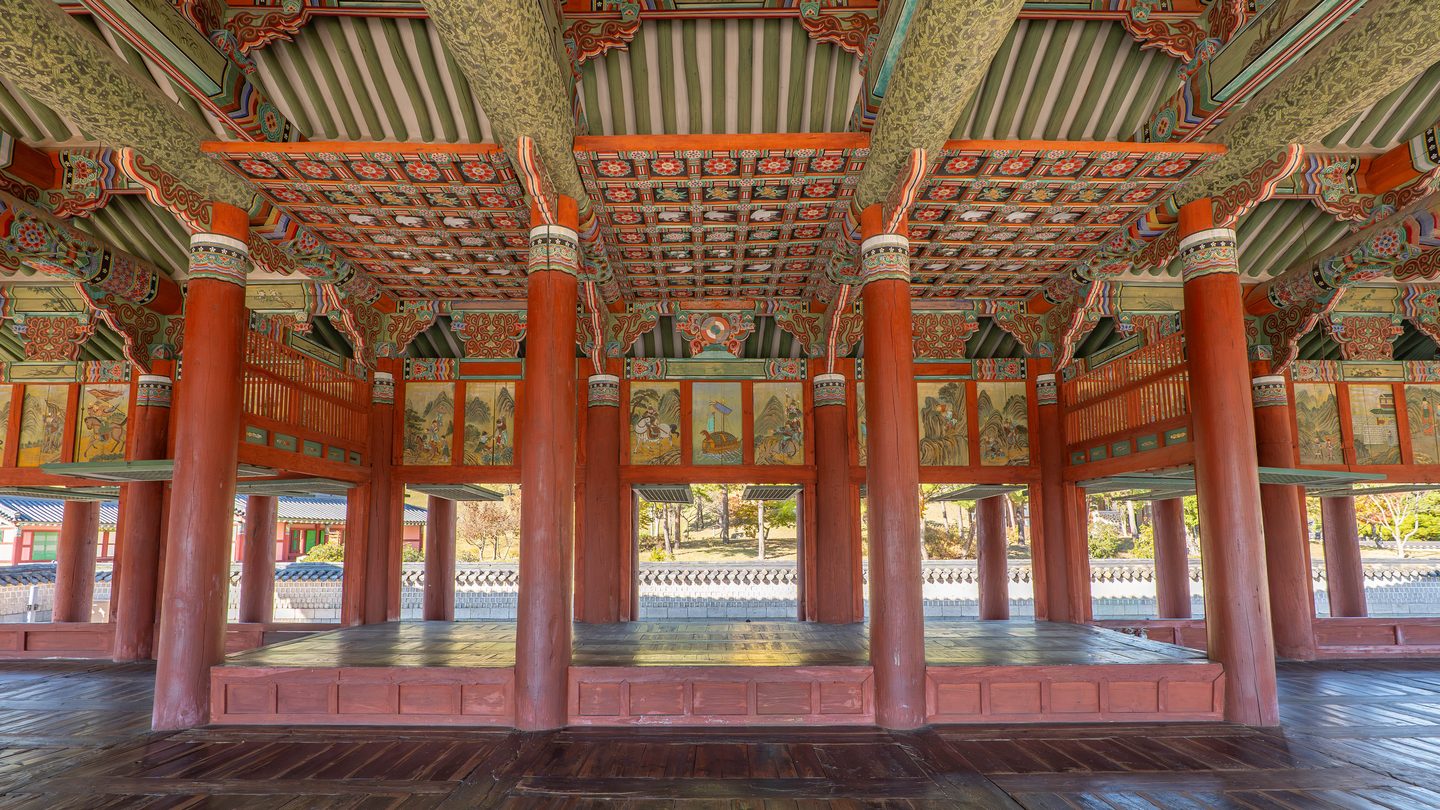
At Sebyeonggwan it matters to look slowly at the details inside as much as at the building's size. At the center is the platform where the tablet representing the king was kept. It is also called the Gwolpaedan, and on the first and fifteenth day of each month officials are said to have paid their respects to the king here. This was not just a wide floor but a place that symbolized royal authority and observed ceremony within the base.
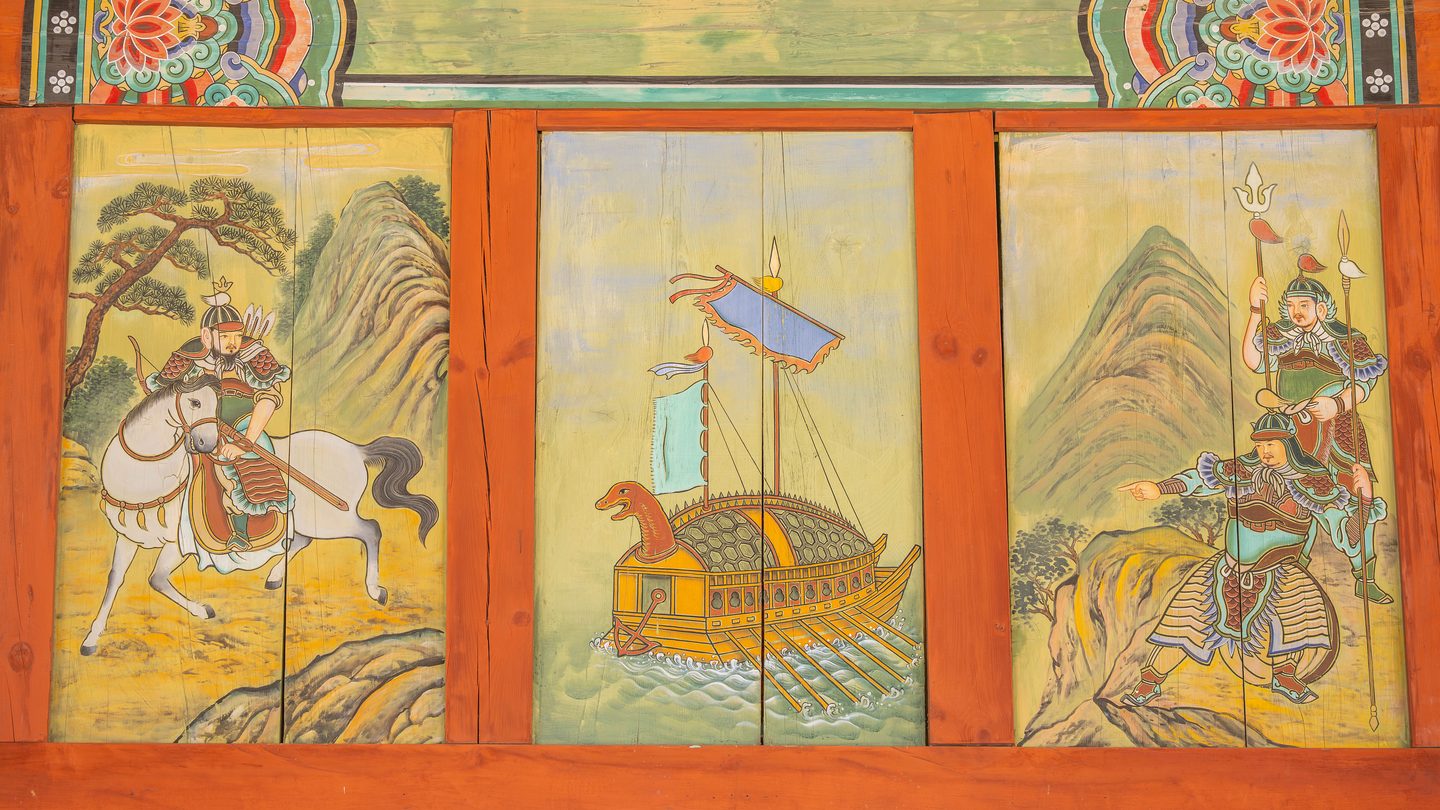
The paintings on the ceiling and wall panels are also worth noticing. Lotus flowers, cranes and peaches are painted on the ceiling, and the wall panels show military scenes and a turtle ship. Search the paintings for these details and you will come to know Sebyeonggwan more deeply.
Turtle ship in the wall painting
Please take off your shoes before stepping onto the floor and follow the on-site guidance for protecting the heritage. Rather than hurrying through, look at the space opening out between the columns, then let your eyes move to the central platform, the ceiling and the wall panels. Sebyeonggwan is a large building to admire from a distance, and also a place that tells more stories the closer you look.
The path from Mangillu through Jigwamun to Sebyeonggwan is short, but each building has its own role and meaning. Walk it knowing what the names mean, and the gates and halls become not just points to pass through but spaces that hold the history and thinking of Tongjeyeong.
“Through the gate that stops the spear, you arrive at the hall that draws down the Milky Way to wash the weapons.”
통영,세병관에서 12공방까지Tongyeong, from Sebyeonggwan to the 12 Workshops
Visitor route · Ticket office to the History Museum
Workshop route · Sebyeonggwan to Yajangbang
From Sebyeonggwan, enter the workshop street behind it and visit 04 Seonjabang through 16 Yajangbang in order. This diagram shows the order, not the exact building positions. Tap a number to read its story.