The Naval Headquarters That Guarded the Sea of Three Provinces: Where Tongyeong Began
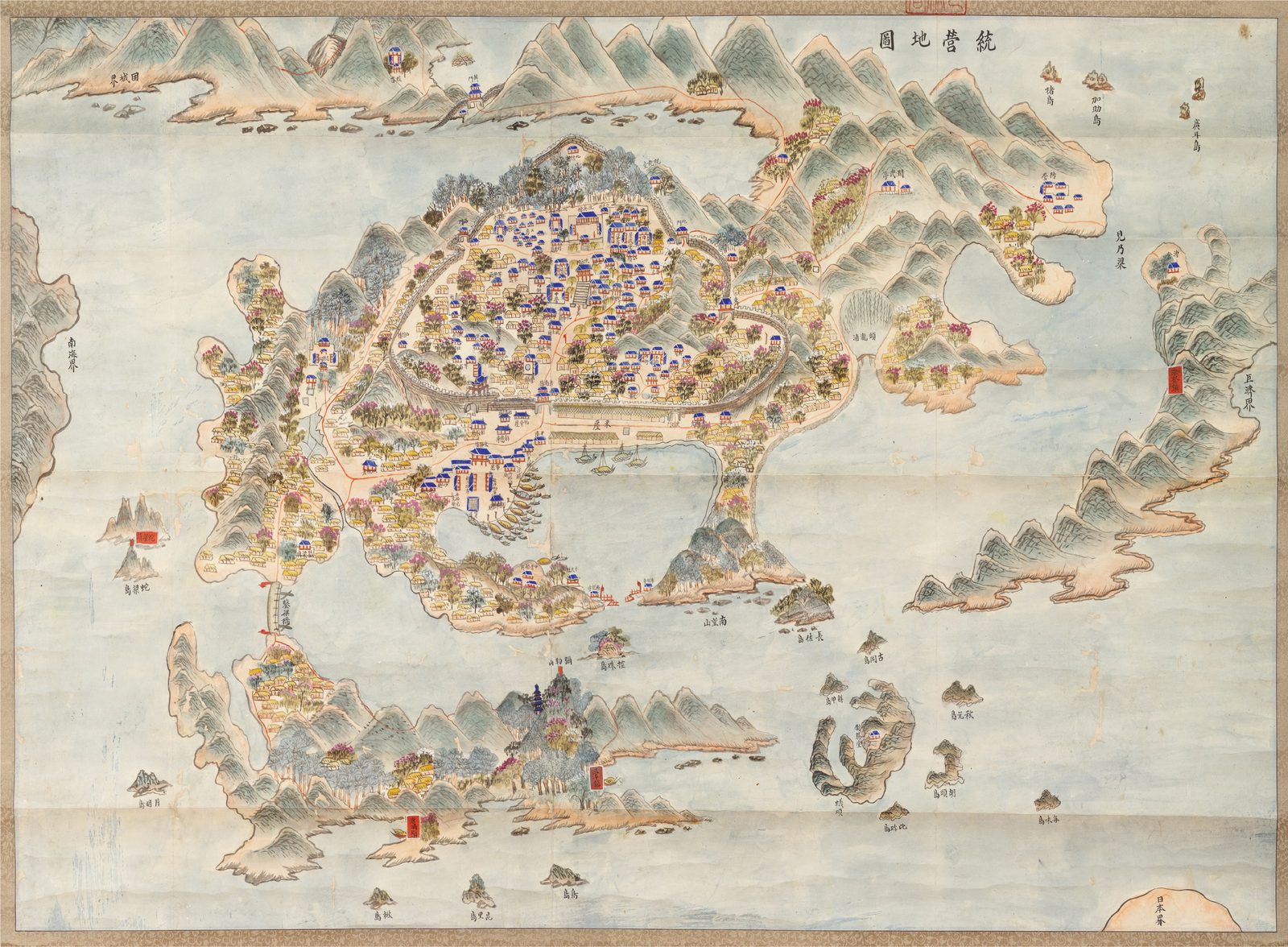
Old map of Tongyeong
Where the name Tongyeong began
Follow the name Tongyeong back in time and you arrive at a military base that once stood on this land: Samdo Sugun Tongjeyeong (三道水軍統制營), the headquarters that commanded the navies of three provinces, Chungcheong, Jeolla and Gyeongsang. Today's city name, Tongyeong, comes from the shortened name people used for this command.
Tongyeong's history begins at sea. In 1592 the Joseon navy defeated the Japanese fleet off Hansando Island, and the following year the court created the post of Samdo Sugun Tongjesa, a single commander for the navies of all three provinces. The first to hold it was Yi Sun-sin. His base on Hansando is regarded as the first Tongjeyeong.
The command was never simply a place where soldiers were stationed. Defending a wide stretch of sea meant not only leading the fleet but also securing grain, producing weapons and supplies, and managing everything the base needed to run. An army at war needed systems for food, clothing, ships and equipment as much as it needed weapons. The history of Tongjeyeong is the history of naval operations, and equally of the administration and supply that made them possible.
From the camp on Hansando to the base at Duryongpo
The command did not always stand where Tongyeong is today. After the Hansando camp was destroyed during the second Japanese invasion (the Jeongyu War) in 1597, the command moved from place to place, including Oapo on Geojedo Island and Chunwonpo in Goseong. Even after the war ended, the naval headquarters went on searching for a settled home.
How the command moved
Hansando1593 · first command
Oapo, Geojeafter the Jeongyu War
Chunwonpo, Goseongone of several stops
Duryongpo1603 · today's Tongyeong
A simplified view of the moves after the Jeongyu War.
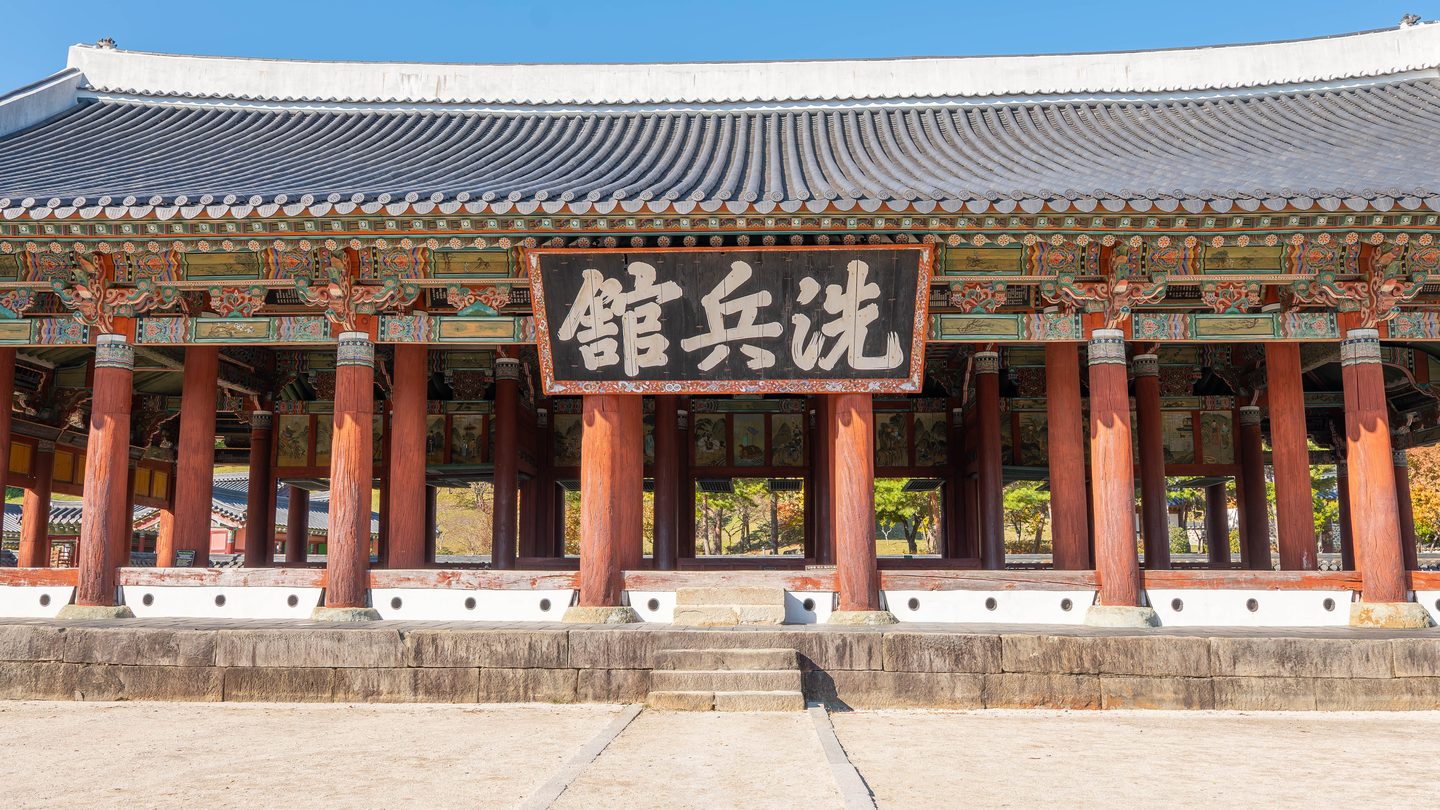
The turning point came in 1603. The sixth commander, Yi Gyeong-jun, chose Duryongpo, today's Munhwa-dong in Tongyeong, as the site of the command and began to build. In 1605 the main buildings followed, including the guesthouse hall Sebyeonggwan, Baekhwadang and Jeonghaejeong. With its center fixed at Duryongpo, the area grew into a place where naval command, administration and supply came together.
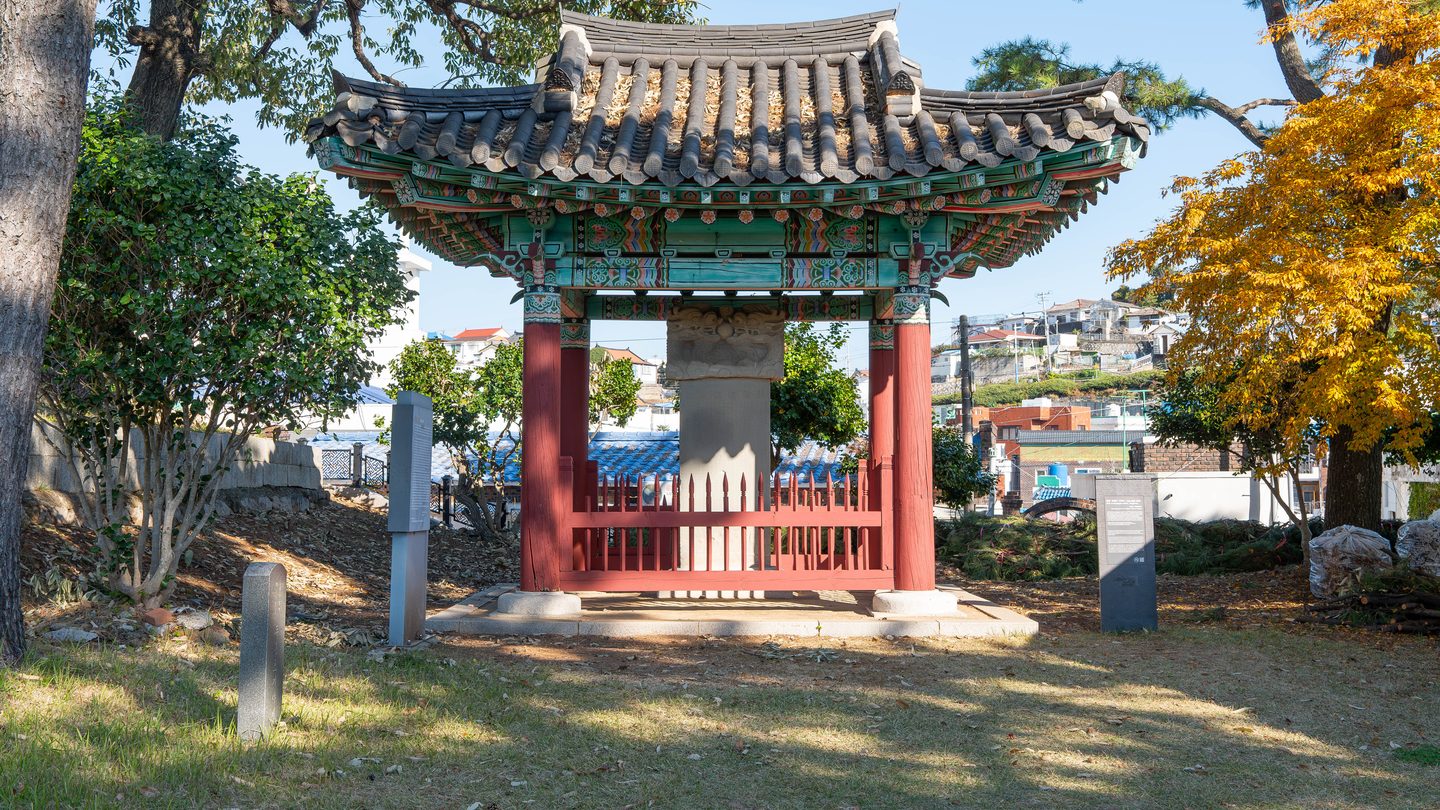
Duryongpo monument
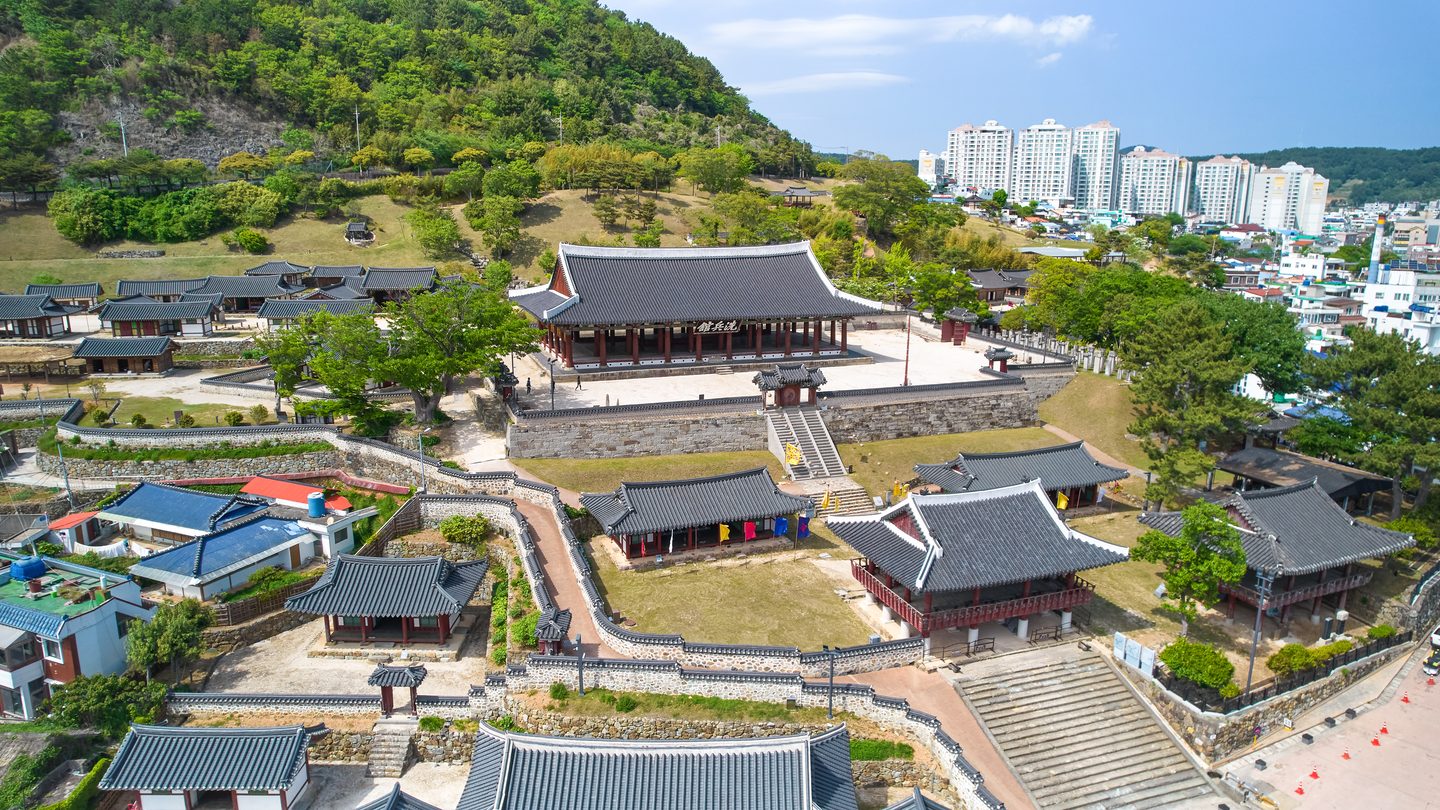
The command at Duryongpo was never a single building. By the mid-nineteenth century, more than a hundred government buildings are said to have stood around Sebyeonggwan. Command and administration, the handling of supplies and grain, and many duties and ceremonies were all bound together in one complex. Tongjeyeong carried out its military purpose while also serving as the heart of a town where people and goods gathered and moved.
Keeping such a large base running required people with specialist skills. Artisans who made weapons, who worked leather, who made fans and hats, furniture and metal fittings all supported its operation. Their work began with military needs, but as the range of required goods widened, it grew into craft production that also supplied everyday goods and tribute gifts for the king.
That crafts flourished as the command grew is an important key to understanding Tongyeong. The base gave artisans reasons to make things and steady work, and the artisans filled the daily life of the base with their skills. Military affairs, administration, logistics and craft were not separate worlds but different functions that kept one place running.
Four functions that ran one place
Tongjeyeong
Commandnaval operations of three provinces
Administrationduties and rites
Supplygrain and military supplies
Craftartisans and workshops
Sebyeonggwan
292 years, and the name that remained
The command at Duryongpo was abolished in 1895. From the start of construction on this site in 1603 to its closure, Tongjeyeong shared 292 years of history with this place. This figure counts only the years at today's Tongyeong; the institution itself and the camp on Hansando go back further, to 1593.
Tongjeyeong timeline
292 years at Duryongpo
1592Joseon navy wins off Hansando
1593Post of Naval Commander created; Yi Sun-sin first
16036th commander Yi Gyeong-jun begins building at Duryongpo
1605Sebyeonggwan, Baekhwadang and Jeonghaejeong built
mid-1800sAbout 100 government buildings around Sebyeonggwan
1895Tongjeyeong abolished
2002Sebyeonggwan named a National Treasure
Not every trace vanished when the command closed. During the Japanese colonial period almost all of its buildings were torn down, but Sebyeonggwan survived to become a key architectural legacy of the old base. Surveys, repairs and restoration on the site followed, and today the space of Tongjeyeong can be explored through Sebyeonggwan, restored buildings and archaeological remains. It is worth remembering that what visitors see now is a historic site where original buildings, excavated foundations and reconstructions stand together.
And so the name of the city remained. The two syllables of Tongyeong carry the name of the headquarters that commanded the navy, and within that name overlap the years from the camp on Hansando to the base at Duryongpo, and the lives of the many people who worked there.
Now walk the paths of Tongjeyeong. The wide wooden floor of Sebyeonggwan and the buildings of the workshop street may look like separate places, but they once belonged to a single system that kept the base running. Once you understand how the naval headquarters worked, the objects and skills of the artisans within it take on new meaning.
“The name Tongyeong holds both the years when the naval headquarters stood here and the lives of the people who worked in it.”
View of Samdo Sugun Tongjeyeong
통영,세병관에서 12공방까지Tongyeong, from Sebyeonggwan to the 12 Workshops
Visitor route · Ticket office to the History Museum
Workshop route · Sebyeonggwan to Yajangbang
From Sebyeonggwan, enter the workshop street behind it and visit 04 Seonjabang through 16 Yajangbang in order. This diagram shows the order, not the exact building positions. Tap a number to read its story.